
Practical Ways to Get More Storage Out of Reach-In Closets Without Renovations
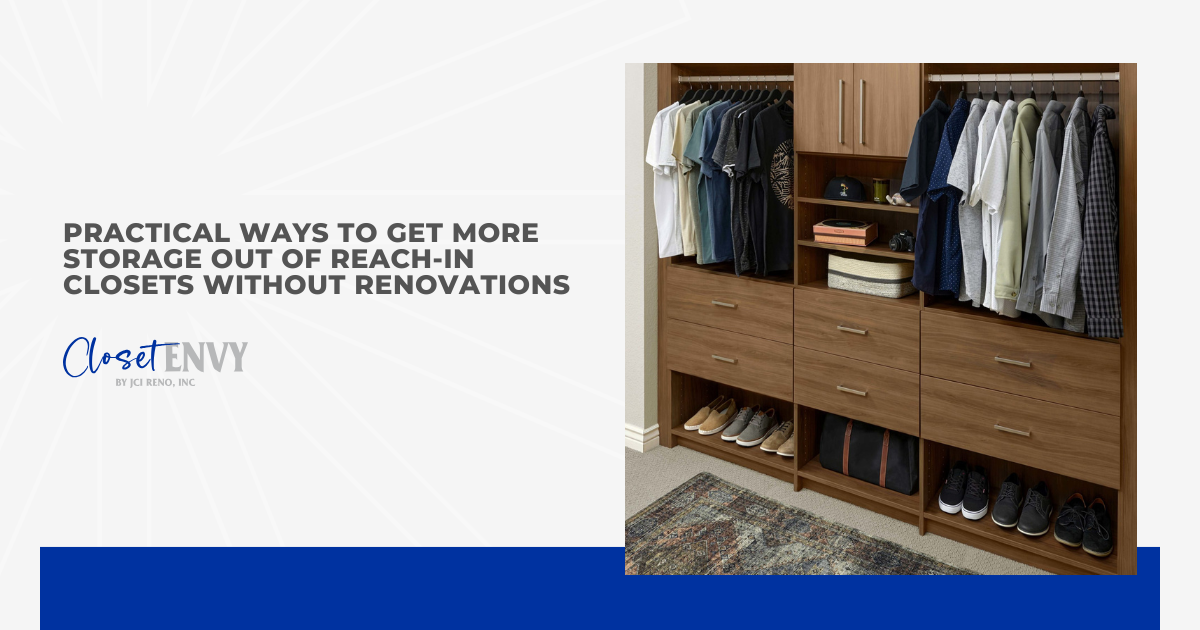
The storage problems people blame on reach-in closets are often self-inflicted, a pattern I've seen play out in the same types of spaces. Poor use of vertical zones, overcrowded rods, and no real system behind where things go are almost always the culprit rather than the size of the closet itself. Fixing those things doesn't require a single wall to come down.
Getting more storage out of a reach-in closet without touching a single wall is a layout problem, not a renovation problem, and the two require very different solutions. It comes down to approaching the space differently by looking at every vertical zone, every surface, and every habit that's currently working against the capacity that's already there. That shift in approach is what turns a closet that feels impossible to organise into one that works reliably without any structural changes at all.
If reach-in closets in your home have been falling short of what they should be doing, these eight strategies close that gap without a single renovation:
- Clear out everything that doesn't belong in the closet first
- Switch to slim velvet hangers to reclaim hanging rod space
- Add a second hanging rod to double usable hanging space
- Use every vertical inch from floor to ceiling strategically
- Store shoes vertically to free up floor and shelf space
- Add shelf dividers to stop stacks from collapsing and spreading
- Bring in hooks and over-the-door organizers for accessories
- Group and sort items by use frequency to reduce daily friction
Read through these carefully, because once you see how much capacity reach-in closets actually have when they're used correctly, you'll stop looking at renovation as the only answer.
Clear Out Everything That Doesn't Belong In The Closet First
One of the most consistent things I notice when walking into a disorganised reach-in closet is that at least a third of what's in it doesn't belong there at all. Old clothes that no longer fit, items without a clear home elsewhere, and things kept out of habit rather than quietly consume shelf and rod space that should be working far harder. Before any storage strategy delivers real results, that clutter needs to go first.
A simple three-category approach makes the process faster and less overwhelming than deciding about each item individually. Sort everything into keep, relocate, and donate, and be honest about what actually gets used rather than what might get used eventually. Items belonging in another room should leave the closet before organising begins, not after.
Starting with a cleared-out closet changes what's possible at every stage that follows. Storage solutions fit better, layouts become clearer, and capacity buried under unnecessary items suddenly becomes available again. It's genuinely surprising how much space opens up once a closet only holds what it's supposed to.
Switch To Slim Velvet Hangers To Reclaim Hanging Rod Space
Standard plastic and wire hangers are among the biggest space wasters in any reach-in closet, and most people don't realise it until they make the switch. Bulky hangers push garments apart, cause clothes to bunch and tangle, and consume far more rod space per item than necessary. Slim velvet hangers are thinner, non-slip, and allow garments to sit closer together without the sliding and bunching that makes a rod feel perpetually overcrowded.
I've recommended this swap more times than I can count, and it's consistently the change that delivers the most immediate visible difference without spending much at all. Switching an entire closet's worth of hangers to slim velvet ones can increase hanging capacity by up to 50% on the same rod. For something that costs very little and takes under an hour, that's a significant gain.
Beyond the space savings, garments stay in far better condition on velvet hangers since they don't slip off or stretch at the shoulders the way they do on wire alternatives. Shirts, dresses, and lightweight jackets benefit most from this change. It's one of those low-cost adjustments that improves both capacity and how the closet looks at the same time.
Add A Second Hanging Rod To Double Usable Hanging Space
Most reach-in closets use a single rod running the full width of the space, which leaves an enormous amount of vertical hanging capacity unused below it. Adding a second rod underneath creates a double-hang section that effectively doubles the number of garments a single wall of hanging space can hold. Short items like shirts, folded trousers, jackets, and blazers work particularly well on a lower rod without any compromise in accessibility.
Knowing which garments suit a double-hang setup makes the configuration far more effective from the start. These are the items that work best on a lower rod:
- Dress Shirts and Blouses: Short enough to hang on a lower rod without touching the shelf or floor below, dress shirts and blouses are ideal candidates for a double-hang section. Folding them in half over the hanger adds extra clearance if the drop is tight.
- Folded Trousers and Shorts: Hung folded over a lower rod, trousers and shorts take up a fraction of the vertical space of full-length hanging and stay wrinkle-free without needing a dedicated shelf section. This also keeps them visible and easy to grab on the way out the door.
- Jackets and Blazers: Structured enough to hang short and hold their shape, jackets and blazers don't need prime upper-rod space when a lower rod handles them just as well. Keeping them at a lower level also makes them easier to browse and pull out quickly.
- Kids' Clothing: Almost every children's garment is short enough for a double-hang setup, which makes this one of the most effective ways to organise a child's reach-in closet. It also keeps their items at a height they can reach and return independently.
I find that splitting the closet with one double-hang side and one single-hang side works well for most wardrobes without requiring any permanent changes to the existing structure. Long items like dresses, coats, and full-length trousers still need a single-rod section, so that configuration handles most wardrobes efficiently. No tools or permanent fixtures are needed for most lower rod additions.
Use Every Vertical Inch From Floor To Ceiling Strategically
Vertical space in a reach-in closet is consistently the most underused dimension, and it's also the one that makes the biggest difference when it's finally put to work. Most closets have significant dead space above the standard shelf and beneath hanging garments that gets ignored simply because it doesn't have an obvious purpose yet. Assigning each of those zones a specific storage function changes how much the closet can hold without changing its footprint at all.
High shelves near the ceiling work well for seasonal items, spare bedding, and anything accessed infrequently. Floor space below hanging garments suits shoe racks, stackable bins, or small drawer units that keep items contained without creating visual clutter on the shelf above. Shelf risers and stackable units on existing shelves add another layer of folded storage within the same zone, effectively creating two levels where only one existed before.
I always encourage looking at a reach-in closet in distinct vertical zones rather than as one undivided space, because that shift alone tends to reveal capacity most people didn't realise was available. Even a few inches of gained height per zone adds up considerably across the full closet. Working vertically rather than just horizontally is where most of the untapped capacity in a reach-in closet actually lives.
Store Shoes Vertically To Free Up Floor And Shelf Space
Shoes are one of the first things I look at when assessing a reach-in closet because they're almost always stored in the least space-efficient way possible. Pairs stored flat in a single layer take up significantly more space than they need to, and in a closet where every inch counts, that adds up fast. Shifting to a vertical storage approach changes how many pairs fit in the same footprint and frees up floor and shelf space for other storage solutions.
Several shoe storage options work well in reach-in closets without requiring permanent installation:
- Stackable Shoe Racks: Tiered shoe racks double or triple the number of pairs that fit in the same floor footprint by stacking pairs vertically rather than spreading them flat. Most stackable racks assemble without tools and can be reconfigured easily as a shoe collection changes over time.
- Angled Shoe Shelves: These shelves display shoes heel-back and toe-forward, fitting more pairs per shelf than flat storage while keeping every pair visible and easy to grab. They work particularly well on existing shelves where space has been freed up after other changes are made.
- Over-The-Door Shoe Pockets: Over-the-door shoe pockets use the back of the closet door for flats, sandals, and small accessories without consuming any shelf or floor space inside the closet itself. Each pocket keeps individual pairs or items separated, which prevents the pile-up that tends to happen on open shelves.
Floor space freed up by vertical shoe storage can accommodate a small drawer unit, a basket for bags and accessories, or simply stay clear to make the closet easier to move around in. It's one of those changes where the impact is immediately visible the moment it's done. Shoes that previously lived wherever there was room suddenly have a system behind them.
Add Shelf Dividers To Stop Stacks From Collapsing And Spreading
Folded items without dividers topple sideways, spread across the shelf, and end up taking far more horizontal space than they would if they stayed upright and contained. Sweaters, jeans, and folded shirts are the worst offenders because their weight causes stacks to lean and eventually collapse, turning one neat pile into a mess that spreads across half a shelf. Shelf dividers solve that problem without requiring tools, drilling, or permanent changes to the closet.
Dividers clip or slide onto existing shelves and keep each folded section upright and contained so the full depth and width of the shelf can be used intentionally. Stacks stay taller, take up less horizontal space, and are far easier to browse without pulling everything out to find one item. Closets with shelf dividers hold their organisation considerably longer than ones without them.
I'd place shelf dividers in the same category as slim hangers, which are a small, inexpensive change that consistently delivers a bigger improvement than most people anticipate before they try it. I also find that once dividers are in place, putting things back in the right section becomes automatic rather than an act of effort, which is exactly the kind of habit a good organisation system should create.
Bring In Hooks And Over-The-Door Organizers For Accessories
Door space and the wall area just inside the closet opening are consistently the most overlooked surfaces in any reach-in closet, and both hold real storage potential that most people never touch. Over-the-door organisers turn otherwise unused vertical space into accessible storage for shoes, bags, belts, scarves, and small accessories that would otherwise end up piled on a shelf or hanging off a rod. No drilling, no permanent fixtures, and no structural changes are needed for most of these solutions.
I like how over-the-door solutions keep accessories visible rather than buried in a drawer or bin, because being able to see what you have makes it far less likely that items get forgotten or duplicated. Removable adhesive hooks placed just inside the closet opening work well for belts, handbags, hats, and jewellery that gets reached for regularly but doesn't belong on a hanger. Command-style hooks remove cleanly without wall damage, making them ideal for renters or anyone hesitant to commit to a permanent fixture.
Over-the-door shoe pockets aren't just for shoes either. Folded scarves, clutch bags, sunglasses cases, and rolled accessories all fit neatly into individual pockets and stay visible and accessible without occupying a single inch of shelf space inside the closet. Using surfaces that weren't being used before is one of the cleanest ways to add capacity to a reach-in closet without changing anything about how it's built.
Group And Sort Items By Use Frequency To Reduce Daily Friction
Placing daily-use items at eye level and within easy reach while pushing seasonal and infrequently used items to higher shelves or back sections reduces the friction that makes a closet feel chaotic even when it's technically organised. Frequency of use should drive every placement decision in the closet, not habit or wherever things happened to land during the last reorganisation. Making that one adjustment costs nothing and has an immediate impact on how easy the space is to use every day.
I also believe that grouping by category makes a reach-in closet far easier to maintain over time, because returning items to the right section becomes intuitive rather than something that requires thought every time. Grouping work clothes together, casual clothes together, and occasion wear in its own section means each category has a defined home, making the closet easier to navigate and faster to use during a busy morning. It also makes it immediately obvious when something has drifted out of place, which keeps the system from gradually unravelling the way loosely organised closets tend to.
Unlike most changes on this list, sorting by use frequency costs nothing and can be done in under an hour. Yet it consistently produces one of the most noticeable improvements in how a closet actually feels to use day to day. Organisation systems that match how a space naturally gets used hold their order far longer than ones built around how things looked at the time.
Conclusion
If there's one thing worth taking from all of this, it's that a frustrating reach-in closet is almost always a solvable problem rather than a permanent one. Start with one change, see what opens up, and let that momentum carry you forward. The closet was never really the problem, and once you see that firsthand, the rest tends to fall into place.

Closet Envy is a family-owned and operated business committed to delivering quality products and workmanship to our customers.
QUICK LINKS
CONTACT INFO
Closet Envy
3579 E Hwy 50 Suite 307,
Carson City, NV 89701
Phone
SCHEDULE A CONSULTATION
Contact us, and we will come out and discuss your project free of charge.